Strength Training for Marathon Runners

Marathon training is about more than just running miles. The best marathon runners incorporate strength training to improve running economy, prevent the injuries that derail training, and maintain form when fatigue sets in late in a race. This program is designed specifically for marathoners, with exercises that build the strength and stability you need without adding unnecessary bulk or interfering with your running.
Why Marathoners Need Strength Training
Running economy—how efficiently you use oxygen at a given pace—is one of the strongest predictors of marathon performance. Research shows that strength training improves running economy by 2-8%. For a 3:30 marathoner, that could mean finishing 5-15 minutes faster without any additional cardiovascular fitness.
Marathon running involves thousands of repetitive impacts. Without adequate strength, form breaks down as muscles fatigue, leading to inefficient movement and injury risk. Strong legs, hips, and core maintain proper mechanics even at mile 24.
Most running injuries stem from weakness, not overuse. Weak hips let knees collapse inward, weak calves can't absorb impact, weak core allows energy-wasting movement. Targeted strength training addresses these weaknesses before they become injuries.
Benefits for Marathon Runners
Improved Running Economy
Use less energy at any pace, allowing you to run faster or longer with the same effort.
Injury Prevention
Strong muscles protect joints and connective tissue from the repetitive stress of marathon training.
Maintained Form
Keep proper running mechanics when fatigue sets in during long runs and races.
Better Speed
Strong legs produce more power, improving both sprint and sustained speed.
Faster Recovery
Well-conditioned muscles recover faster between hard training sessions.
Longer Running Career
Strength training helps prevent the injuries and imbalances that end running careers.
Program Overview
Who it's for: Marathon runners looking to improve performance and prevent injury
Don't have all this equipment? GymFriend can build you a custom program using whatever you have available.
Why These Exercises?
Each exercise in this program was selected for a specific reason. Here's why:
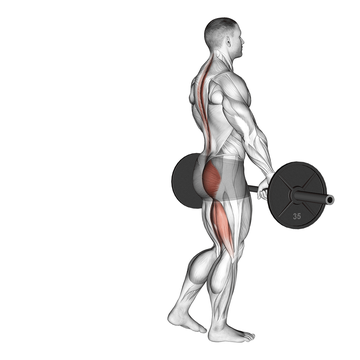
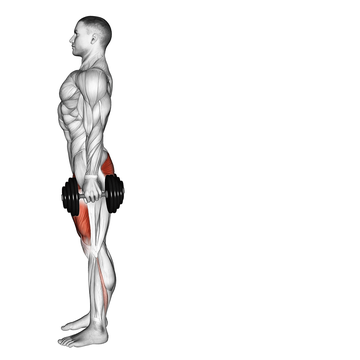
Barbell Single Leg Deadlift
Builds single-leg stability and hamstring strength crucial for running mechanics.
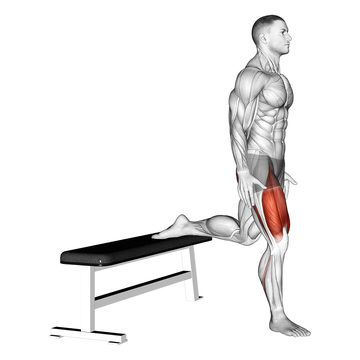
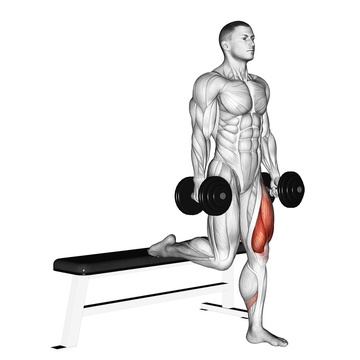
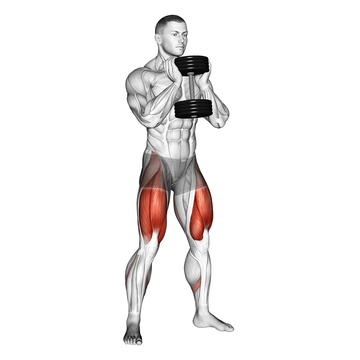
Dumbbell Single Leg Split Squat
Unilateral leg strength that mimics running stride while building stability.
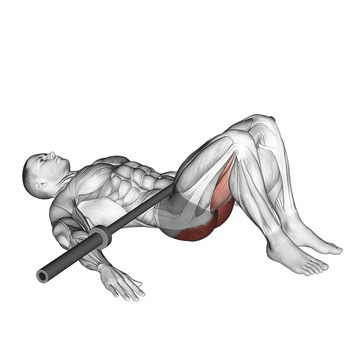
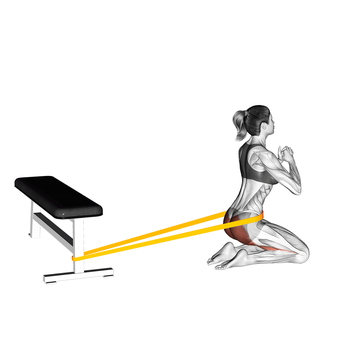
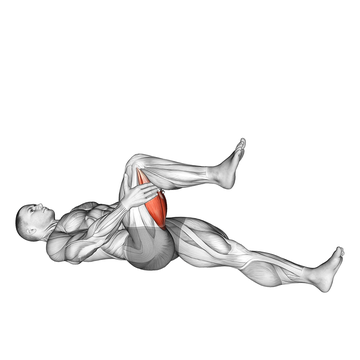
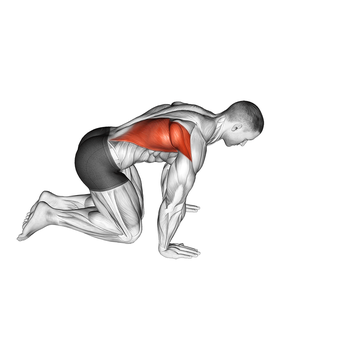
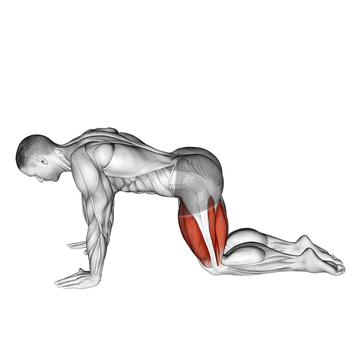
Resistance Band Hip Thrusts On Knees
Glute strength for powerful hip extension during running.
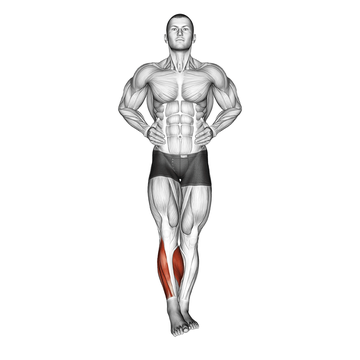
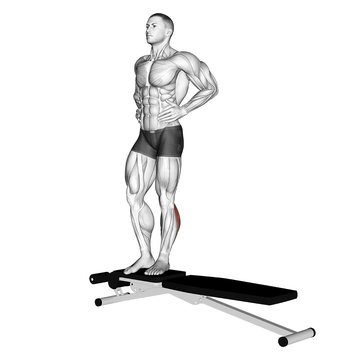
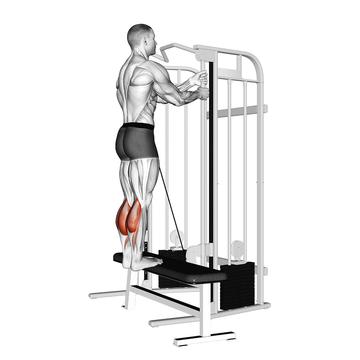
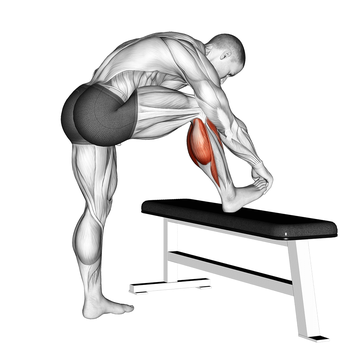
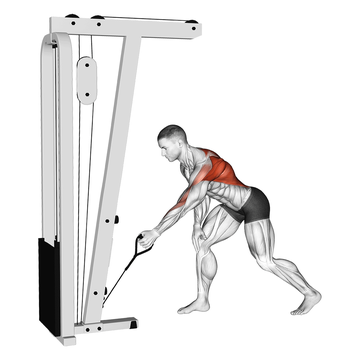
Cable Standing Calf Raise
Calf strength for propulsion and injury prevention. Critical for runners.
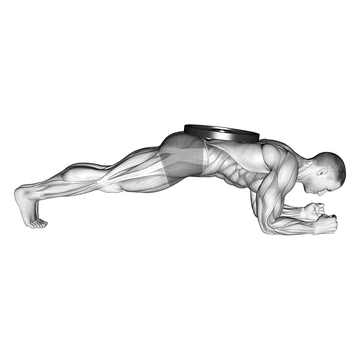
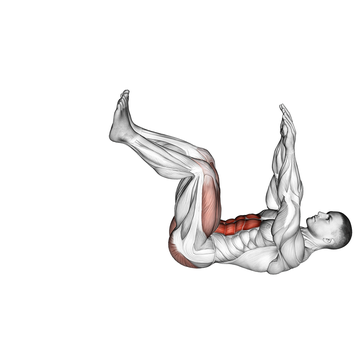
Weighted Front Plank
Core stability prevents energy-wasting trunk rotation during running.
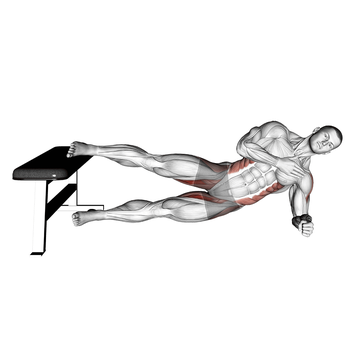
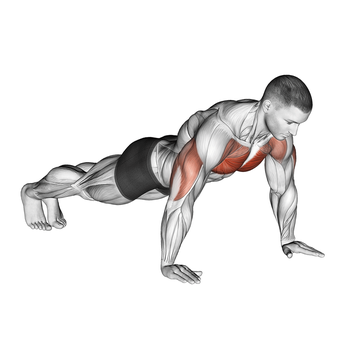
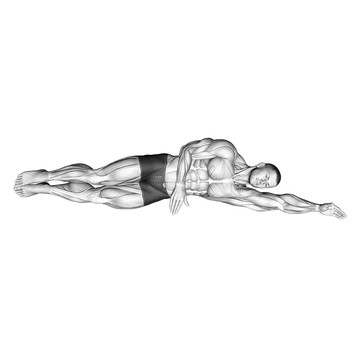
Side Plank Hip Adduction
Hip and core stability that prevents hip drop during running stride.
The Complete 2 days (during base building), 1-2 days (during peak training) Program
Follow this program consistently for best results. Start with weights that feel manageable and aim to increase gradually each week as you get stronger.
Want this program adjusted for your fitness level, goals, or schedule? GymFriend can create a personalized version just for you.
Integrating Strength with Running
- Schedule strength training after easy runs or on rest days, never before key workouts.
- Keep sessions short (30-40 minutes). You're not trying to be a powerlifter.
- Focus on moderate weight and higher reps (8-15). Heavy singles aren't necessary for runners.
- Reduce strength training during peak marathon training phases and taper.
- Single-leg exercises are more specific to running than bilateral movements.
- Core work can be done daily in small doses rather than one long session.
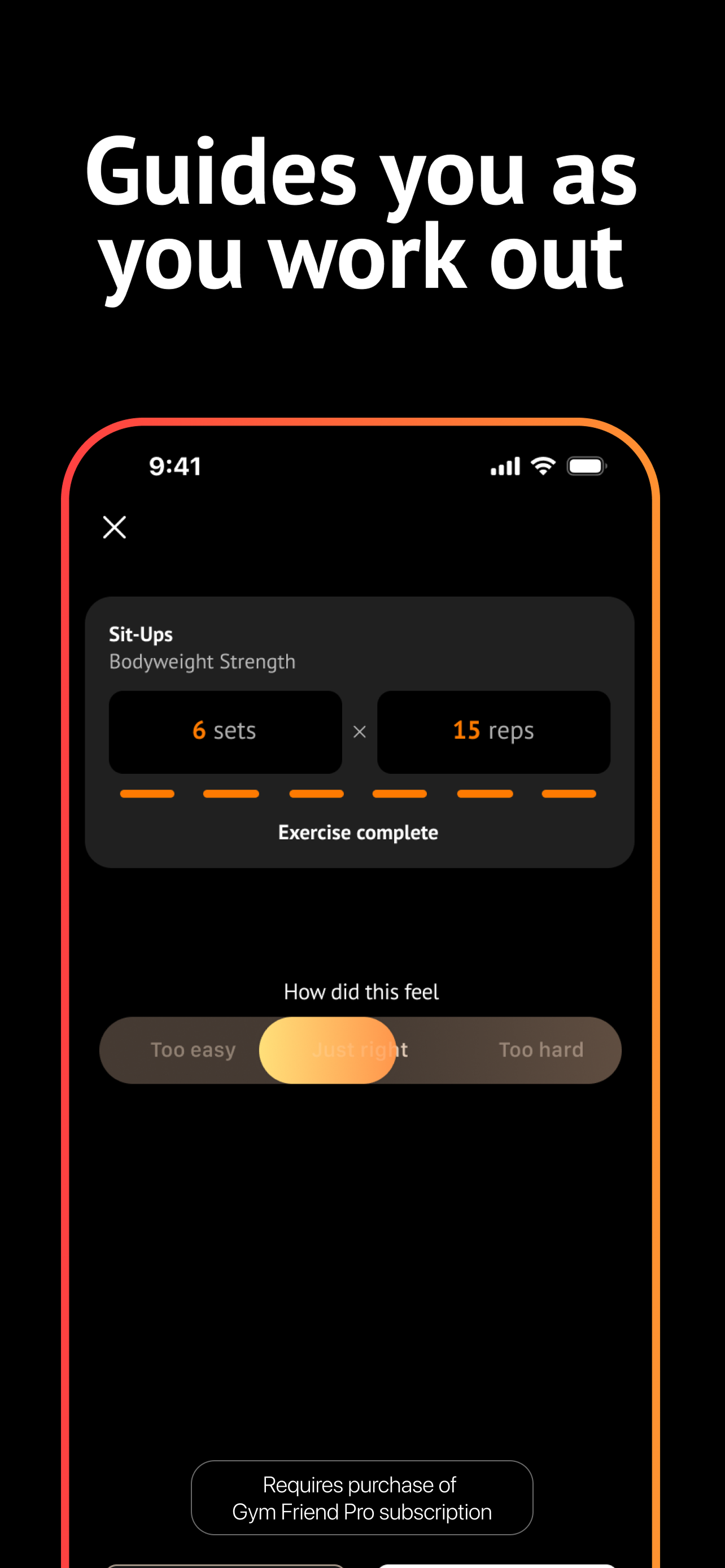
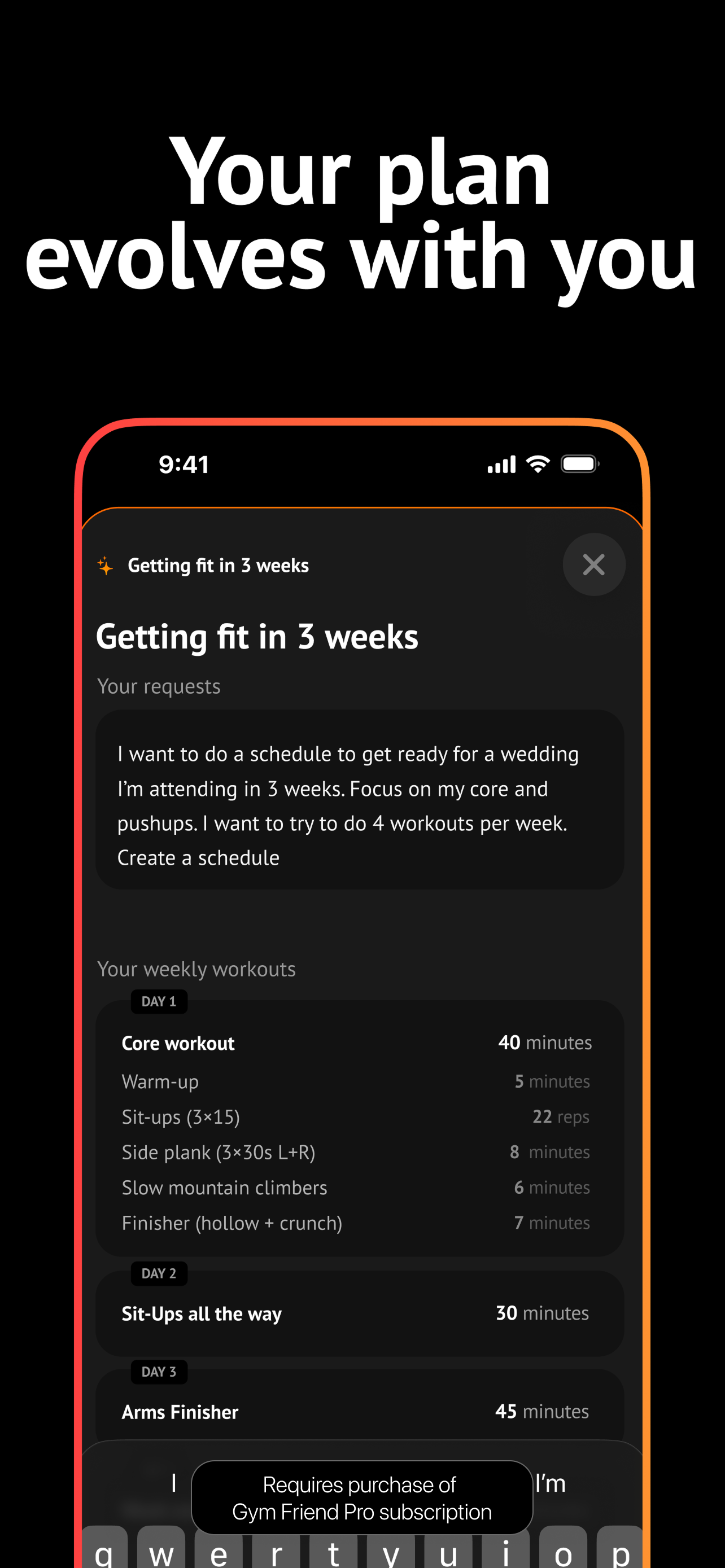
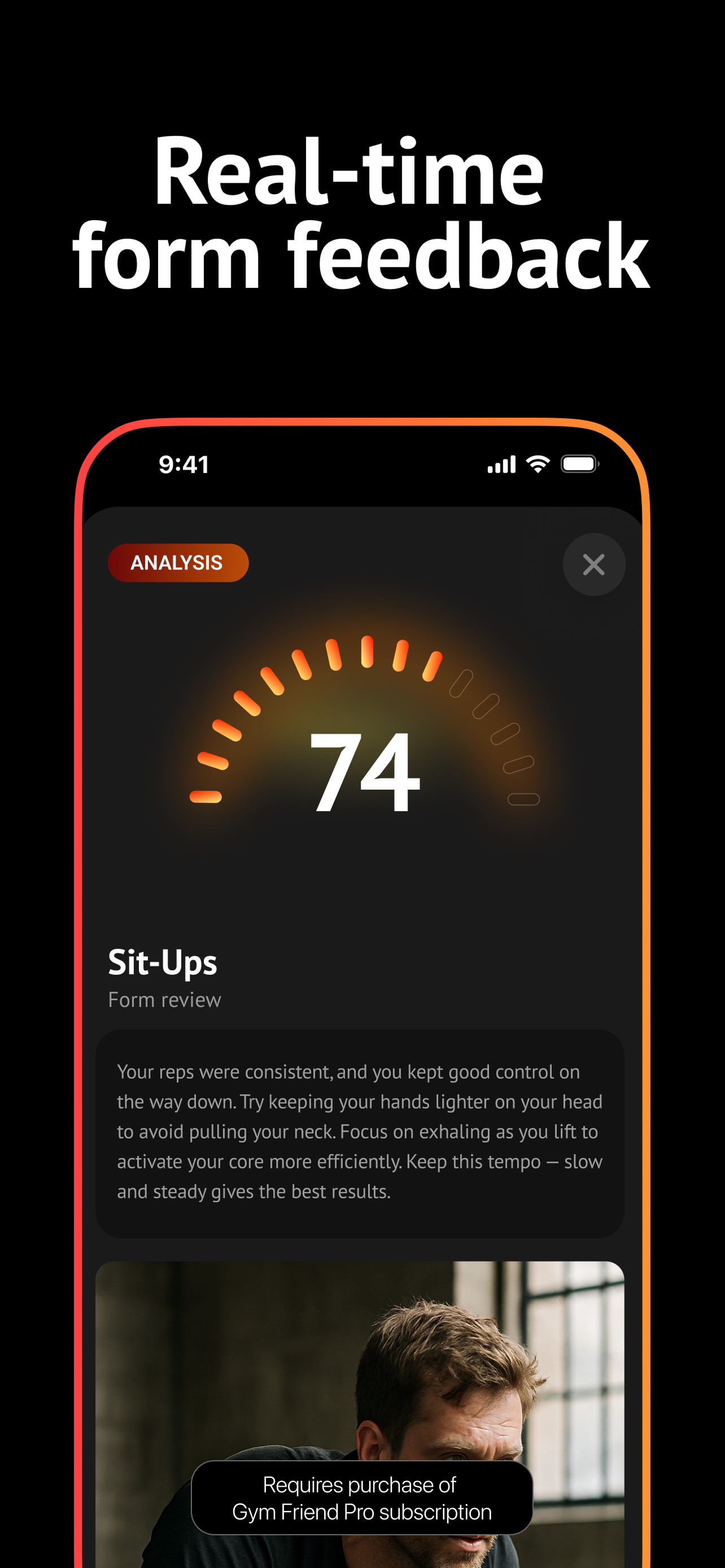
Edit your plan, track progress, and get realtime coaching


Frequently Asked Questions
Will strength training make me slower by adding bulk?
No. This program builds strength without significant muscle mass. The strength gains improve running economy, making you faster. Professional marathoners all strength train.
When should I do strength training?
After easy runs or on rest days. Never before long runs or speed workouts. Keep 48 hours between strength training and key running sessions when possible.
Should I stop strength training during taper?
Reduce but don't stop completely. Drop to one light session per week during the final 2-3 weeks. Complete elimination can leave legs feeling flat.
What if my legs are tired from running?
Prioritize running—that's your sport. Skip or lighten strength sessions when fatigued. Strength training supports running; it shouldn't compromise it.
How soon will I notice benefits?
Injury-prevention benefits begin immediately. Running economy improvements typically appear after 6-8 weeks of consistent strength training.