Strength Training for Endurance

For years, endurance athletes avoided the weight room, fearing it would make them slow and bulky. Research has proven the opposite: strategic strength training improves endurance performance by increasing economy, power output, and injury resistance. This program shows endurance athletes how to get the benefits of strength training without compromising their primary sport.
Why Endurance Athletes Need Strength
Strength training improves running and cycling economy—the energy cost of maintaining a given pace. Stronger legs push off more efficiently. Studies show 4-8% improvements in economy from strength training, translating directly to faster times.
Injury prevention is perhaps the biggest benefit. Endurance sports create repetitive stress that breaks down tissue. Stronger muscles, tendons, and bones better absorb that stress. Most running injuries stem from weakness, not overuse alone.
Strength training won't make you bulky unless you eat for it. Endurance athletes naturally have high caloric expenditure. The goal is neural adaptation and tissue resilience, not hypertrophy.
Benefits for Endurance Athletes
Improved Economy
Stronger legs move you more efficiently at any pace.
Injury Prevention
Stronger tissues absorb repetitive stress better.
Power Output
Kick harder at the end of races and handle hills better.
Posture Maintenance
Stay upright when fatigued instead of collapsing into poor form.
Bone Health
Weight-bearing exercise strengthens bones that endurance sports stress.
Longevity
Reduce the wear-and-tear that sidelines endurance athletes.
Program Overview
Who it's for: Runners, cyclists, triathletes, and other endurance athletes
Don't have all this equipment? GymFriend can build you a custom program using whatever you have available.
Why These Exercises?
Each exercise in this program was selected for a specific reason. Here's why:
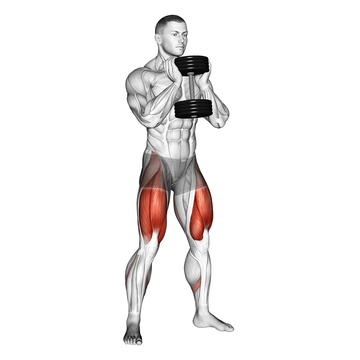
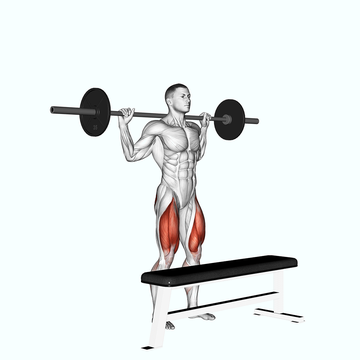
Dumbbell Goblet Squat
Leg strength without heavy spinal loading. Builds the quads and glutes that power movement.
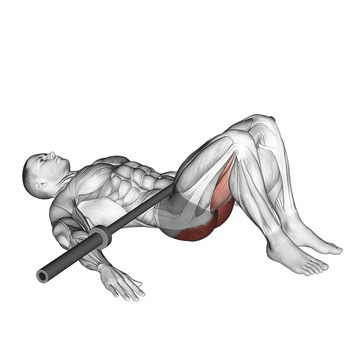
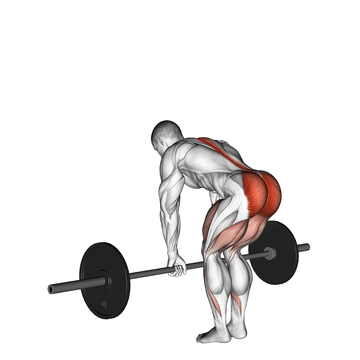
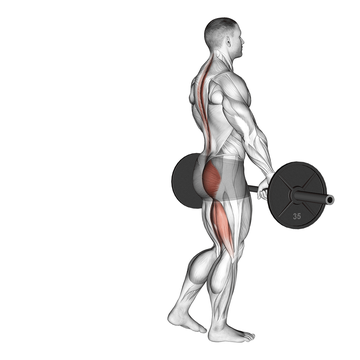
Barbell Romanian Deadlift
Hamstring and posterior chain strength. Prevents hamstring injuries.
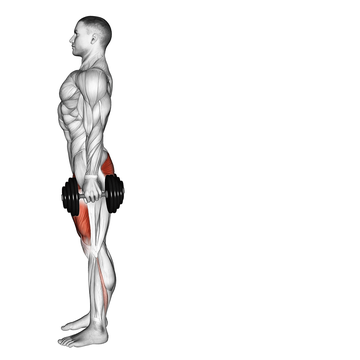
Barbell Single Leg Deadlift
Single-leg stability and balance specific to running gait.
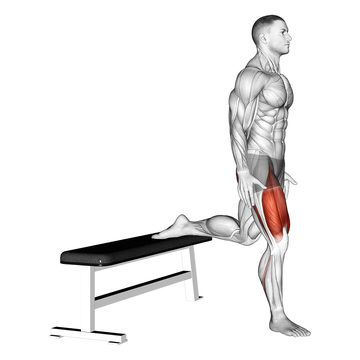
Dumbbell Rear Lunge
Hip stability and glute strength in a running-specific pattern.
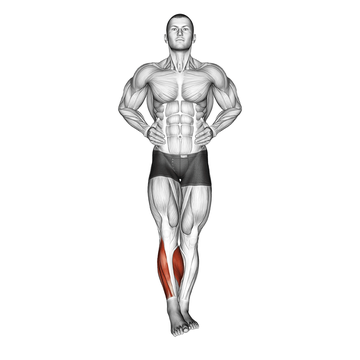
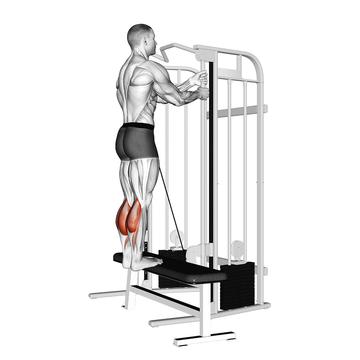
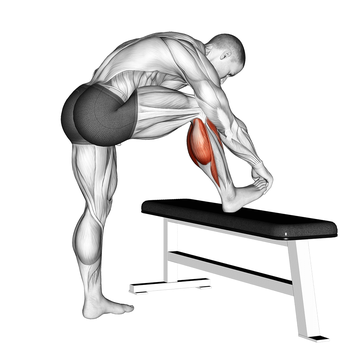
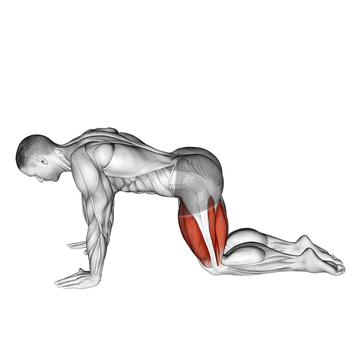
Cable Standing Calf Raise
Calf and Achilles resilience for impact absorption.
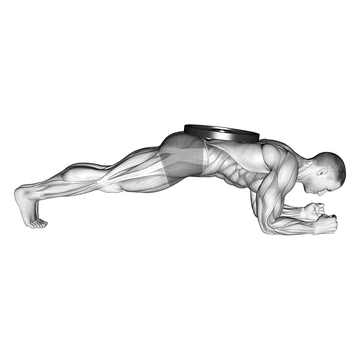
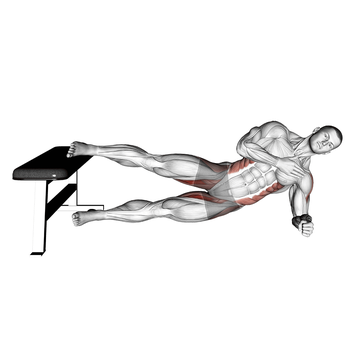
Weighted Front Plank
Core stability to maintain posture when fatigued.
The Complete 2 days Program
Follow this program consistently for best results. Start with weights that feel manageable and aim to increase gradually each week as you get stronger.
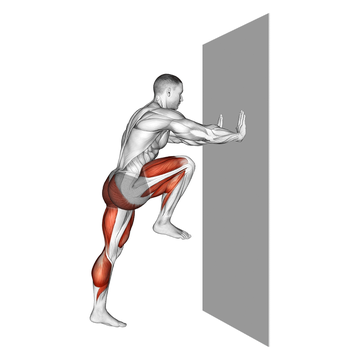
Want this program adjusted for your fitness level, goals, or schedule? GymFriend can create a personalized version just for you.
Strength Training for Endurance
- Schedule strength after easy runs or on rest days, not before hard workouts.
- Keep sessions short (30-40 min) to avoid excessive fatigue.
- Focus on lower body and core—that's where you need it most.
- Don't chase muscle size. You want strength without mass.
- Periodize around your racing season—reduce volume near competitions.
- Start conservative. Too much too fast causes the soreness that disrupts training.
Edit your plan, track progress, and get realtime coaching


Frequently Asked Questions
Will lifting weights make me slower?
No—properly implemented strength training improves economy and makes you faster. The key is appropriate volume that doesn't create excessive fatigue or unwanted mass.
When should I strength train relative to running/cycling?
After easy sessions or on rest days, never before hard workouts or races. Allow at least 24-48 hours before quality endurance sessions.
How heavy should I lift?
Moderate to heavy (5-10 rep range) with good form. You want strength adaptation, not just endurance. Light weights with high reps won't provide the stimulus you need.
Should I lift during race season?
Yes, but reduce volume. One session per week with lower sets maintains strength without creating fatigue. Don't lift in the days immediately before races.
Will I get bulky?
No. Bulking requires caloric surplus and high volume hypertrophy training. Endurance athletes eating to support their sport won't accidentally build significant mass.