Strength Training for Climbing
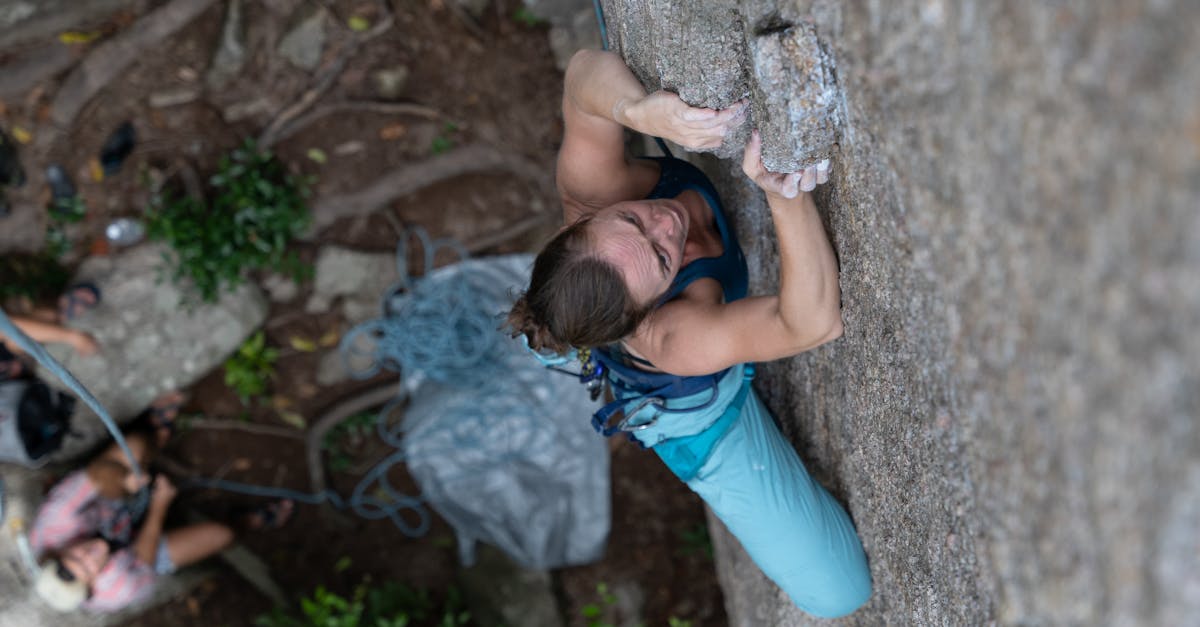
Climbing is a strength sport disguised as an endurance activity. While technique matters enormously, at some point you need the pulling power, grip strength, and core tension to make hard moves. This program builds climbing-specific strength while maintaining the movement quality and body awareness that climbing demands. Get stronger, climb harder, prevent injuries.
Strength for Climbing
Pulling strength is the foundation. Every climbing move involves pulling your body toward holds. While grip strength gets attention, your lats, biceps, and shoulders generate the force that moves you upward.
Core tension connects your hands to your feet. Without a strong core creating body tension, your feet cut loose on steep terrain. Core strength for climbing isn't about sit-ups—it's about maintaining full-body tension.
Antagonist training prevents injury. Climbing develops pulling muscles while neglecting pushing muscles. This imbalance leads to shoulder injuries. Training pushes, shoulder external rotation, and chest helps climbers stay healthy.
Benefits for Climbers
Harder Grades
Increased strength means moves that felt impossible become achievable.
Better Endurance
Stronger muscles work at lower percentages, fatiguing slower.
Injury Prevention
Balanced strength and antagonist training protect shoulders and elbows.
Core Tension
Maintain body position on steep terrain and prevent barn-dooring.
Power Moves
Dynamic moves and deadpoints require strength that technique can't replace.
Confidence
Physical capability lets you attempt intimidating moves.
Program Overview
Who it's for: Climbers wanting to increase strength for harder climbing
Don't have all this equipment? GymFriend can build you a custom program using whatever you have available.
Why These Exercises?
Each exercise in this program was selected for a specific reason. Here's why:
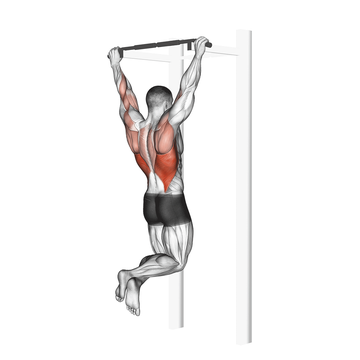
Pull-up
The fundamental climbing movement. Vertical pulling strength.
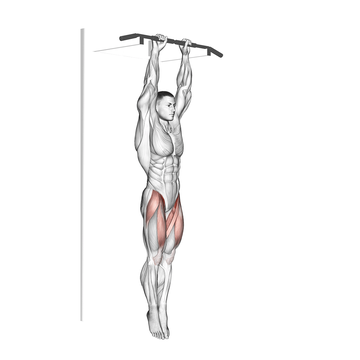
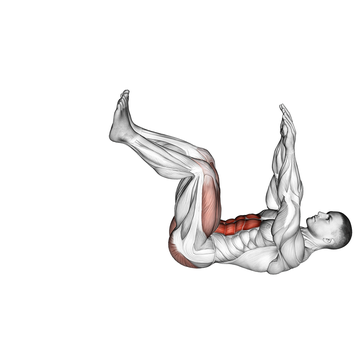
Hanging Straight Leg Raise
Core compression strength for steep climbing and roof pulling.
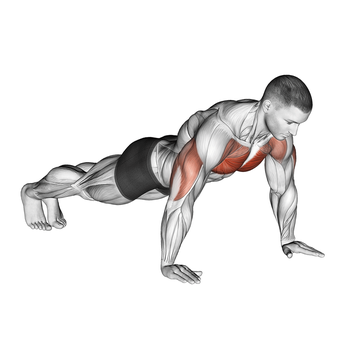
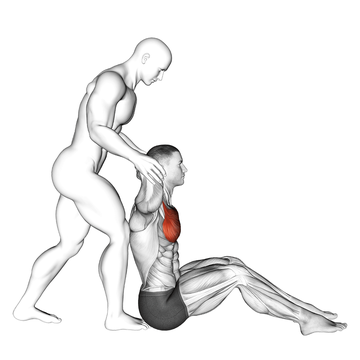
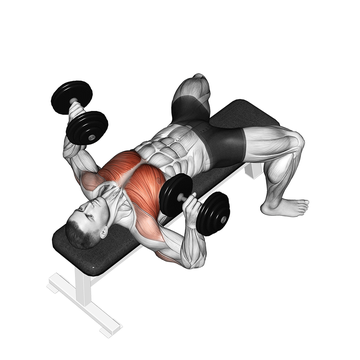
Push-up
Antagonist training for shoulder health and balance.
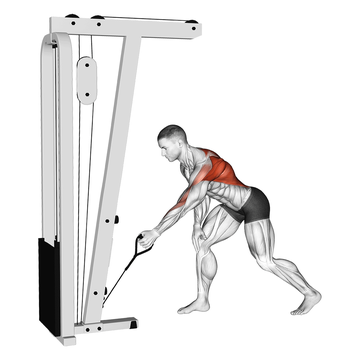
Cable One Arm Bent Over Row
Horizontal pulling for back thickness and lock-off strength.
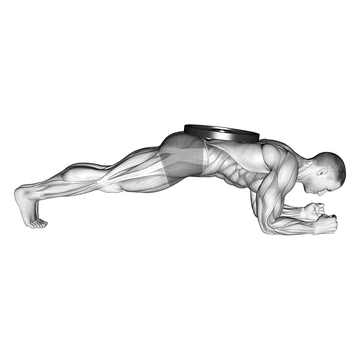
Weighted Front Plank
Core stability and full-body tension.
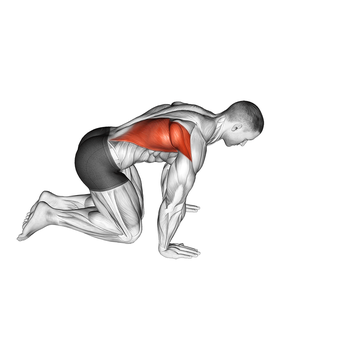
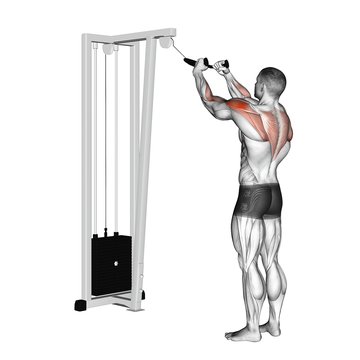
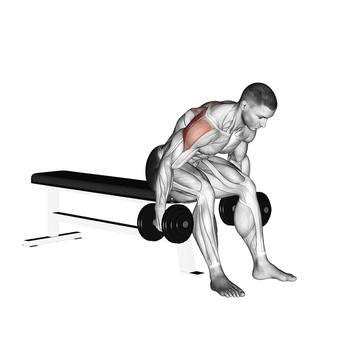
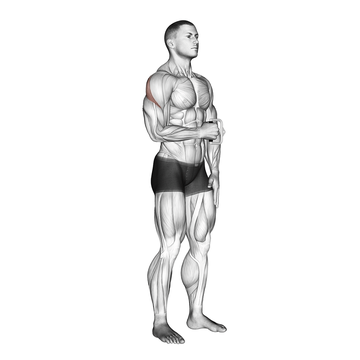
Cable Rear Delt Row (with Rope)
External rotation strength for shoulder health.
The Complete 2 days (on rest days from climbing) Program
Follow this program consistently for best results. Start with weights that feel manageable and aim to increase gradually each week as you get stronger.
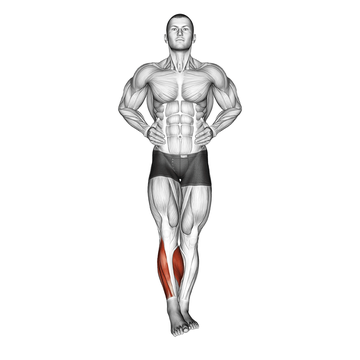
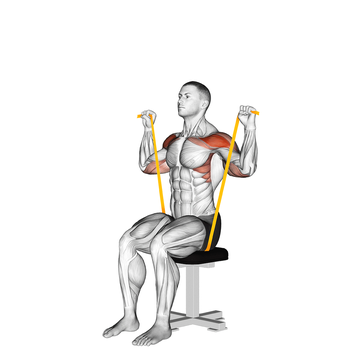
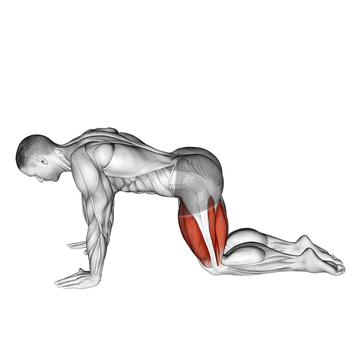
Want this program adjusted for your fitness level, goals, or schedule? GymFriend can create a personalized version just for you.
Strength Training for Climbers
- Train on rest days from climbing. Don't lift before you climb.
- Emphasize pulling movements but include pushing for balance.
- Keep reps moderate (5-8) for strength rather than high reps for endurance.
- Don't neglect antagonist training—it prevents the injuries that sideline climbers.
- Core work should emphasize tension, not just flexion. L-sits and front levers over crunches.
- Periodize around climbing goals. Reduce volume before sending projects.
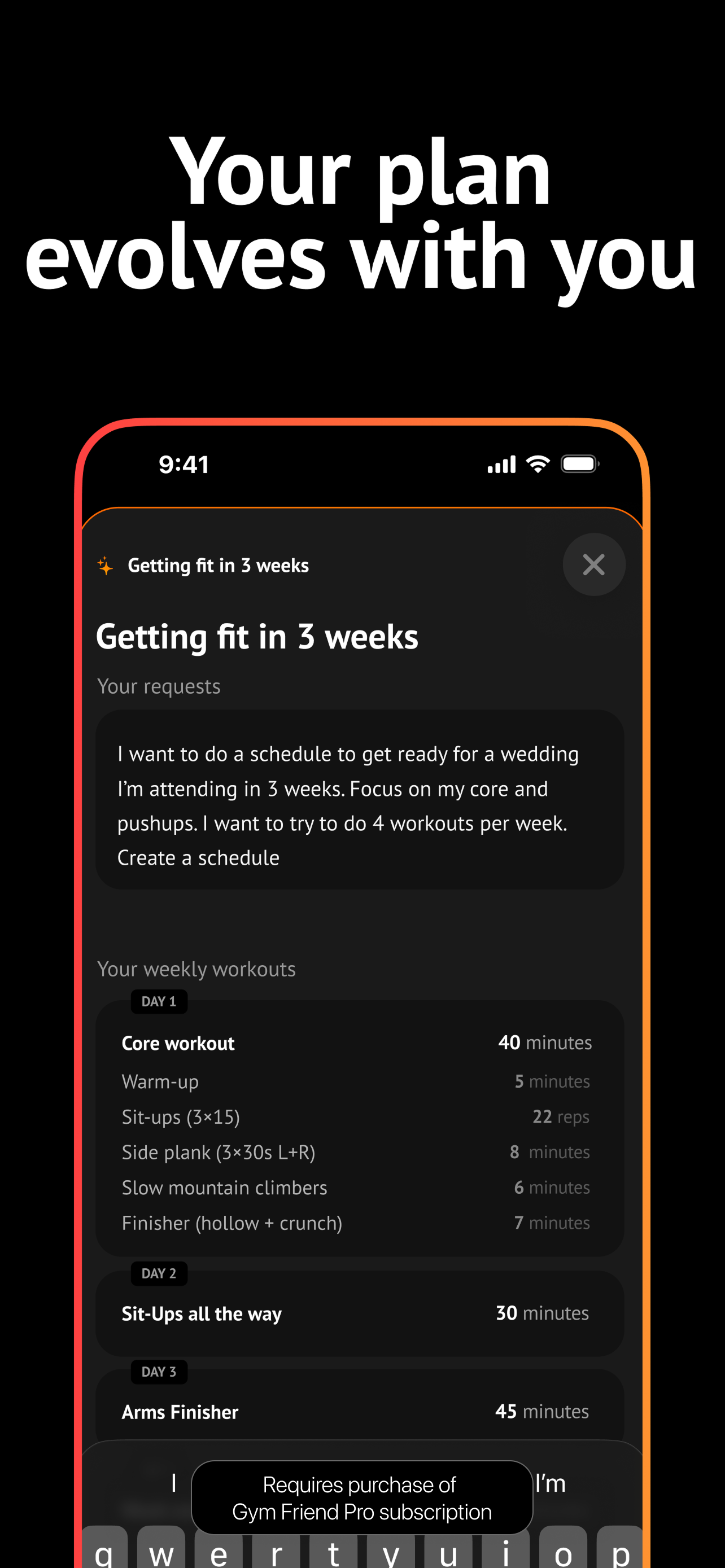
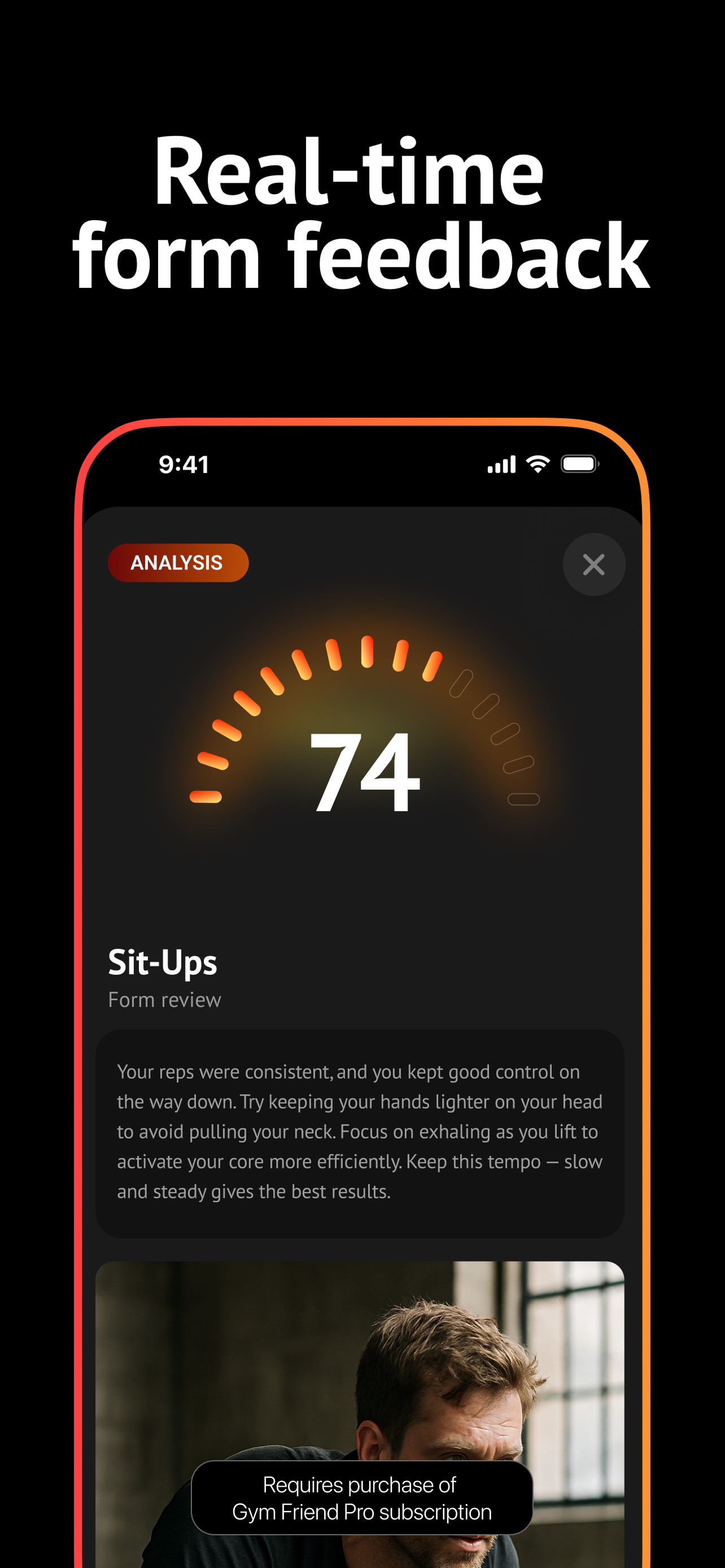
Edit your plan, track progress, and get realtime coaching

Frequently Asked Questions
Will lifting weights make me too heavy for climbing?
Not if done intelligently. Building strength-to-weight ratio helps climbing. Avoid excessive hypertrophy training. Focus on strength with moderate volume.
Should I train grip separately?
Climbing trains grip well. If grip is a limiter, add dead hangs on various holds. Finger training on hangboards requires careful progression to avoid injury.
How do I fit this with climbing?
Lift on rest days from climbing. Never lift before climbing—it impairs performance. 2 days per week of strength training is sufficient.
Why do I need to train pushing if climbing is pulling?
Balance prevents injury. Climbers who only pull develop shoulder imbalances that lead to rotator cuff issues. Push-ups and pressing keep you healthy.
Should I do weighted pull-ups?
Once you can do 10+ strict pull-ups, adding weight builds strength. Start light (10-15 lbs) and progress gradually.