Exercises for Core Strength
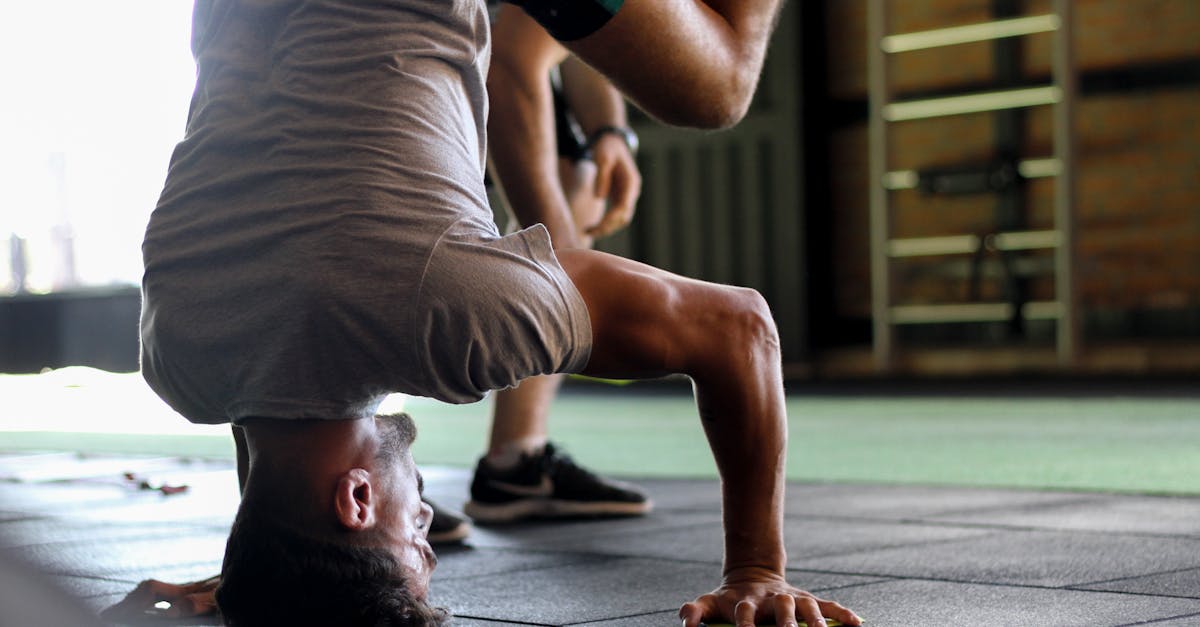
True core strength isn't about endless crunches or holding a plank until you shake—it's about building the stability and power that protects your spine, powers your lifts, and makes you stronger in everything you do. The core is the link between your upper and lower body; when it's strong, you're strong. This program builds genuine core strength through proven exercises that develop stability, anti-rotation, and total midsection power.
What Core Strength Really Means
Your core includes everything from your hips to your shoulders—not just the six-pack muscles. The rectus abdominis, obliques, transverse abdominis, erector spinae, and hip muscles all work together to stabilize your spine and transfer force through your body.
The core's job is primarily stabilization, not movement. It braces to protect your spine during heavy lifts, resists rotation when you carry something in one hand, and prevents extension when you reach overhead. Training these anti-movement functions builds the core strength that matters.
Strong core ≠ visible abs. Core strength is about function—being able to brace hard, resist forces, and protect your spine. Visible abs are about low body fat. You can have a strong core that's invisible, or weak abs that show. Ideally, you train for strength.
Benefits of Core Strength
Spine Protection
A strong core protects your lower back during heavy lifting and daily activities.
Bigger Lifts
Core strength is often the limiting factor in squats, deadlifts, and overhead work.
Better Posture
Strong core muscles help you maintain an upright posture naturally.
Athletic Power
Force transfers through the core. Stronger core = more power in any movement.
Balance & Stability
Core strength is fundamental to maintaining balance in all positions.
Reduced Pain
Many people find lower back pain decreases with improved core strength.
Program Overview
Who it's for: Anyone wanting to build genuine core strength
Don't have all this equipment? GymFriend can build you a custom program using whatever you have available.
Why These Exercises?
Each exercise in this program was selected for a specific reason. Here's why:
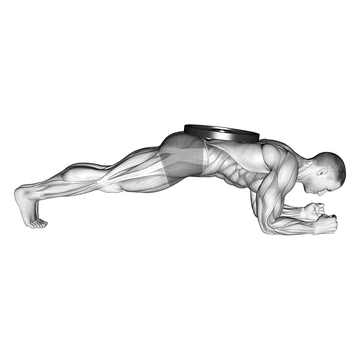
Weighted Front Plank
Anti-extension training. Builds the ability to brace and hold neutral spine.
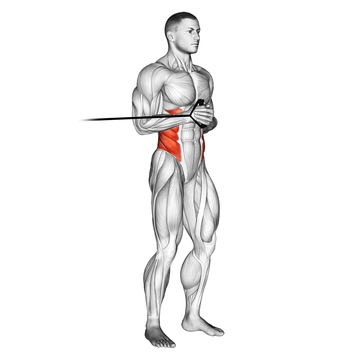
Band Horizontal Pallof Press
Anti-rotation strength. Teaches your core to resist twisting forces.
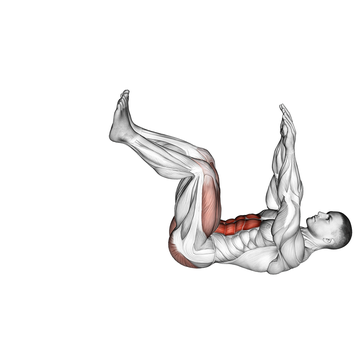
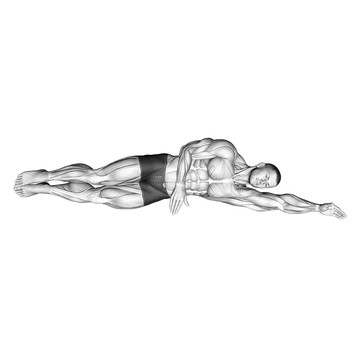
Dead Bug
Core stability while limbs move. Fundamental functional pattern.
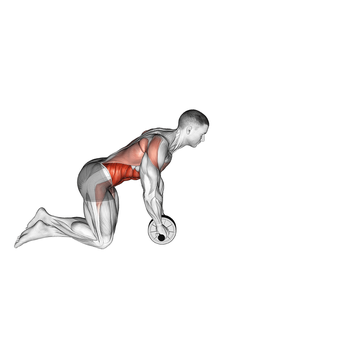
Wheel Rollout
Advanced anti-extension. Builds serious core strength under load.
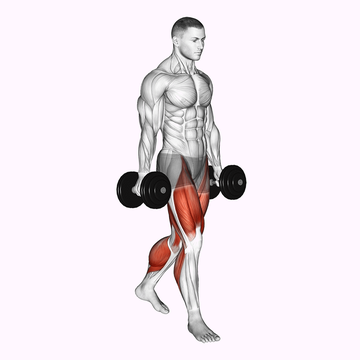
Farmers Walk
Core stability under load while moving. Highly functional.
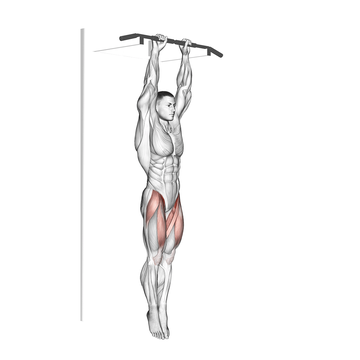
Hanging Straight Leg Raise
Core flexion strength when you need to lift your legs. Athletic and demanding.
The Complete 3 days (often added to other workouts) Program
Follow this program consistently for best results. Start with weights that feel manageable and aim to increase gradually each week as you get stronger.
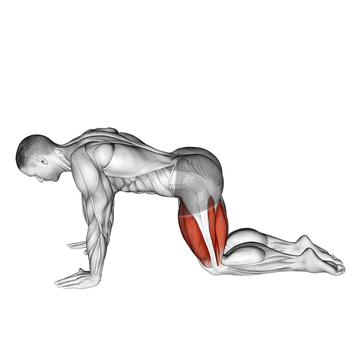
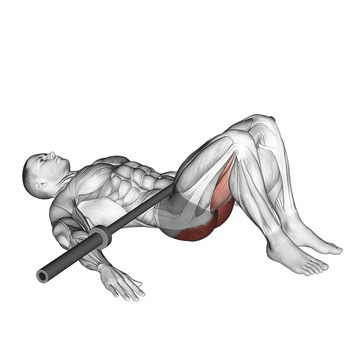
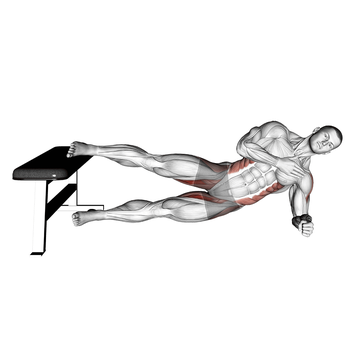
Want this program adjusted for your fitness level, goals, or schedule? GymFriend can create a personalized version just for you.
Building Real Core Strength
- Learn to brace. Take a deep breath into your belly and tighten like you're about to be punched.
- Quality over quantity. A 30-second perfect plank beats a shaky 2-minute hold.
- Include anti-movement exercises. Planks, Pallof press, and carries build functional strength.
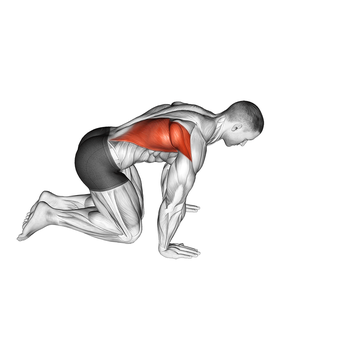
- Don't neglect your back. Bird dogs and back extensions balance ab work.
- Train core after main lifts. You want full core strength for heavy compound movements.
- Progress difficulty, not just duration. Harder variations beat longer holds.
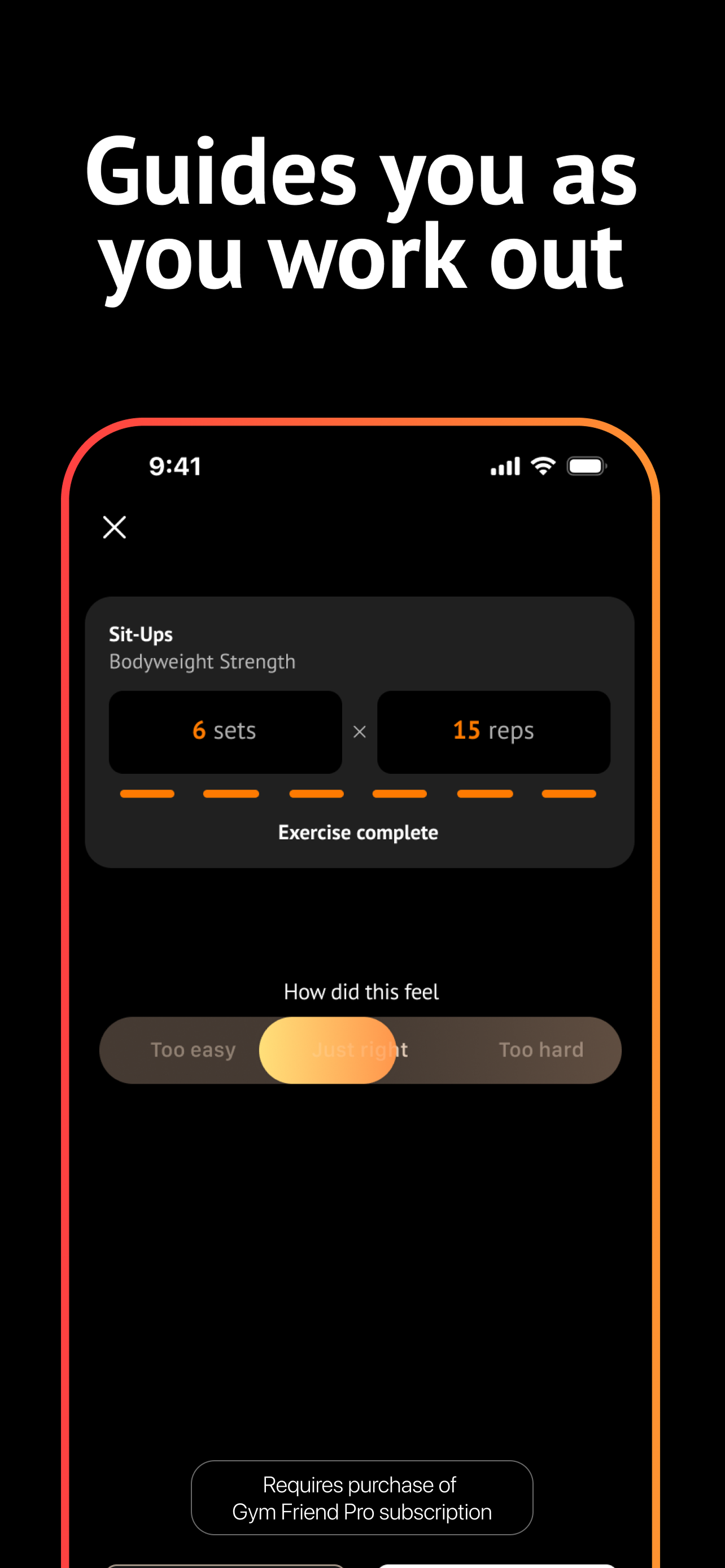
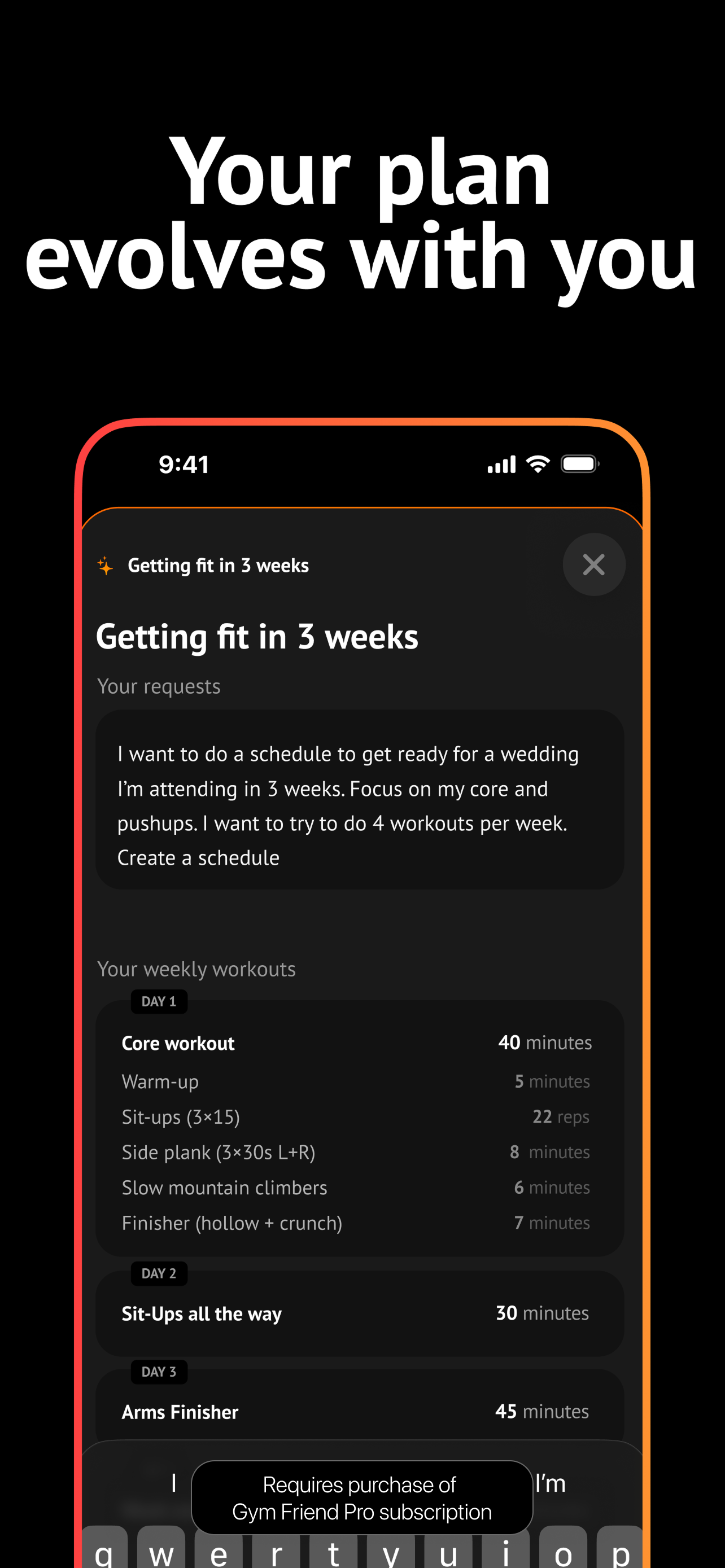
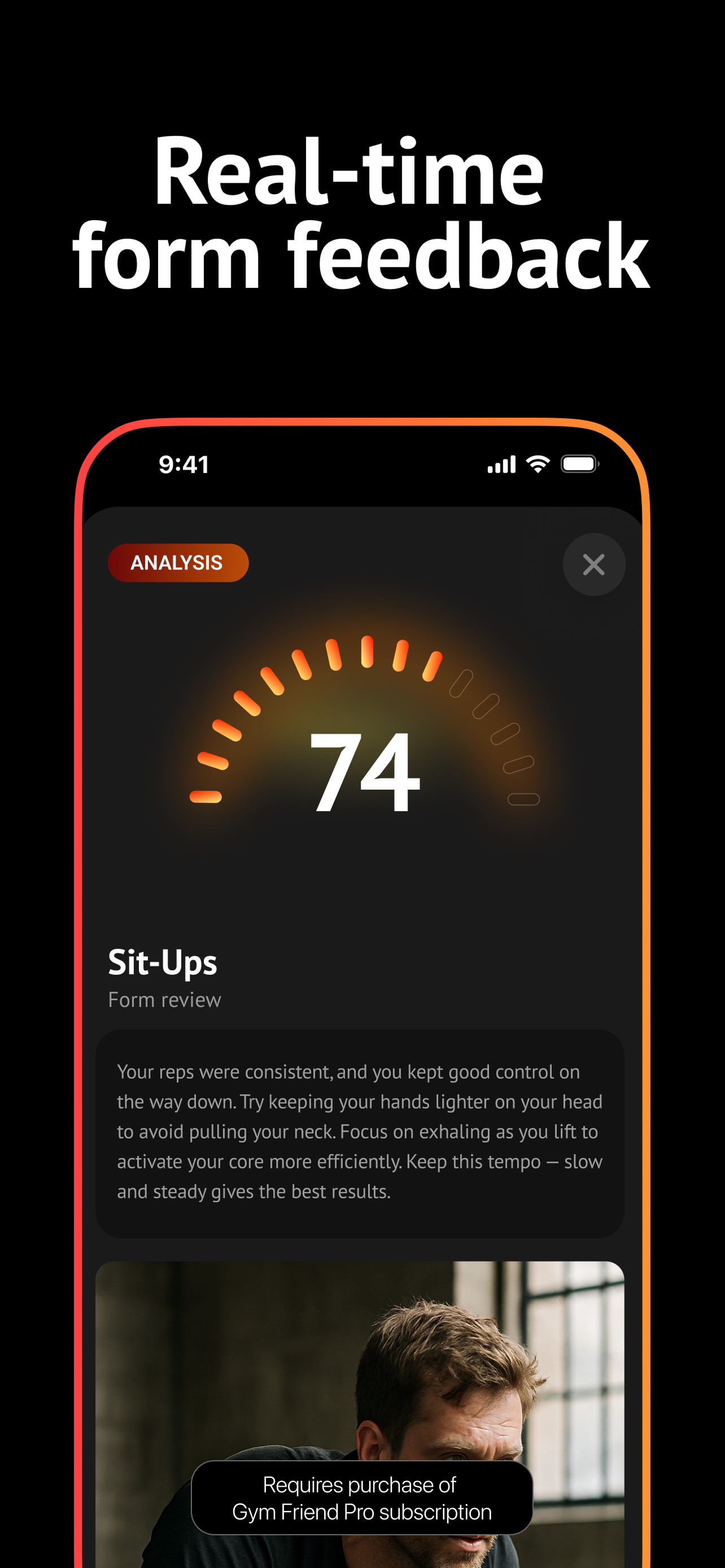
Edit your plan, track progress, and get realtime coaching
Frequently Asked Questions
Should I train core every day?
Not usually. 3-4 times per week is sufficient. Core muscles need recovery too. However, light activation work (bird dogs, planks) can be done daily.
Are planks better than crunches?
For core stability and function, yes. Planks train the core's primary function—stabilization. Crunches train flexion, which has its place but shouldn't dominate.
Why is my lower back sore from core training?
Your core is losing engagement and your back is taking over. When form breaks, stop. Reset and focus on keeping your core braced throughout.
Will core training help my lifts?
Yes. Core strength is often the limiting factor in squats, deadlifts, and pressing. A stronger core means you can safely handle more weight.
How do I know if my core is strong enough?
Can you hold a solid plank for 60 seconds? Maintain stability during heavy lifts? Resist rotation carrying a heavy object one-sided? These are practical tests.