Exercises for Better Posture

Poor posture isn't just about standing straight—it's a result of muscle imbalances that develop over years of sitting, slouching, and looking at screens. The good news: these imbalances can be corrected. This program strengthens the muscles that pull you upright (upper back, core) while stretching the muscles that pull you forward (chest, hip flexors). The result is posture that feels natural, not forced, because the underlying imbalances are fixed.
Understanding Posture Problems
Modern life creates predictable muscle imbalances. Sitting at desks weakens glutes and core while tightening hip flexors. Looking at screens rounds shoulders forward and weakens upper back muscles. These patterns create the slouched posture that causes pain and projects poor confidence.
"Sit up straight" doesn't work because it fights against muscle imbalances rather than fixing them. Within minutes, you slump back because the muscles that should hold you upright are too weak, and the muscles that pull you forward are too tight.
Correcting posture requires two things: strengthening the weak muscles (primarily upper back and core) and stretching the tight muscles (primarily chest and hip flexors). This program addresses both systematically.
Benefits of Better Posture
Reduced Pain
Proper alignment eliminates the neck, shoulder, and back pain caused by slouching.
Improved Confidence
Standing tall projects confidence and authority. People notice the difference.
Better Breathing
Upright posture allows full lung expansion that slouching restricts.
More Energy
Poor posture causes fatigue as muscles strain to hold inefficient positions.
Enhanced Appearance
Good posture makes you look taller, leaner, and more athletic.
Injury Prevention
Proper alignment protects joints and prevents the chronic issues from poor mechanics.
Program Overview
Who it's for: Anyone with forward head, rounded shoulders, or general poor posture
Don't have all this equipment? GymFriend can build you a custom program using whatever you have available.
Why These Exercises?
Each exercise in this program was selected for a specific reason. Here's why:
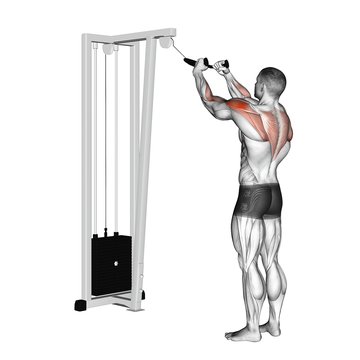
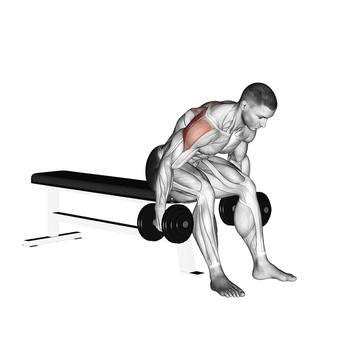
Cable Rear Delt Row (with Rope)
Strengthens the upper back muscles that pull shoulders back into proper position.
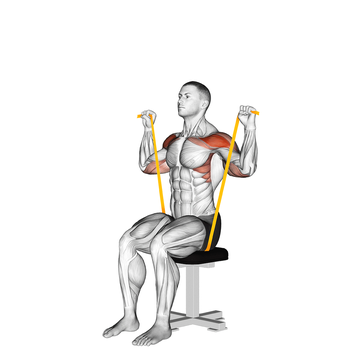
Resistance Band Seated Shoulder Press
Simple exercise that strengthens rhomboids and rear delts for shoulder retraction.
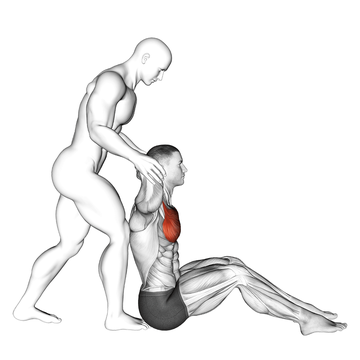
Behind Head Chest Stretch
Stretches tight chest muscles that pull shoulders forward.
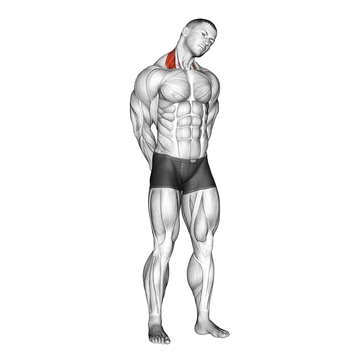
Neck Side Stretch
Addresses forward head posture by strengthening deep neck flexors.
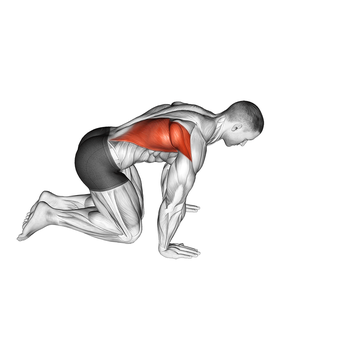
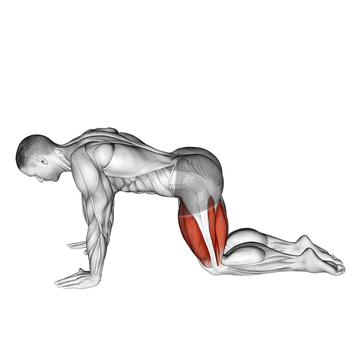
Kneeling Lat Stretch
Stretches hip flexors that tilt the pelvis forward when tight.
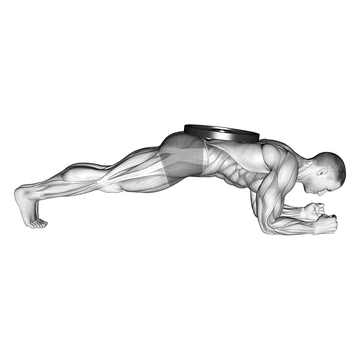
Weighted Front Plank
Core stability holds the spine in neutral alignment.
The Complete 3-4 days (stretches can be done daily) Program
Follow this program consistently for best results. Start with weights that feel manageable and aim to increase gradually each week as you get stronger.
Want this program adjusted for your fitness level, goals, or schedule? GymFriend can create a personalized version just for you.
Fixing Your Posture
- Be patient. Muscle imbalances developed over years; they won't reverse in days.
- Stretching alone isn't enough. You must also strengthen the weak muscles.
- Focus on upper back strengthening—this is usually the biggest deficit.
- Take breaks from sitting. Set a timer to move every 30-60 minutes.
- Progress is gradual but real. You'll notice changes within 4-6 weeks.
- Maintaining posture should eventually feel effortless as muscles strengthen.
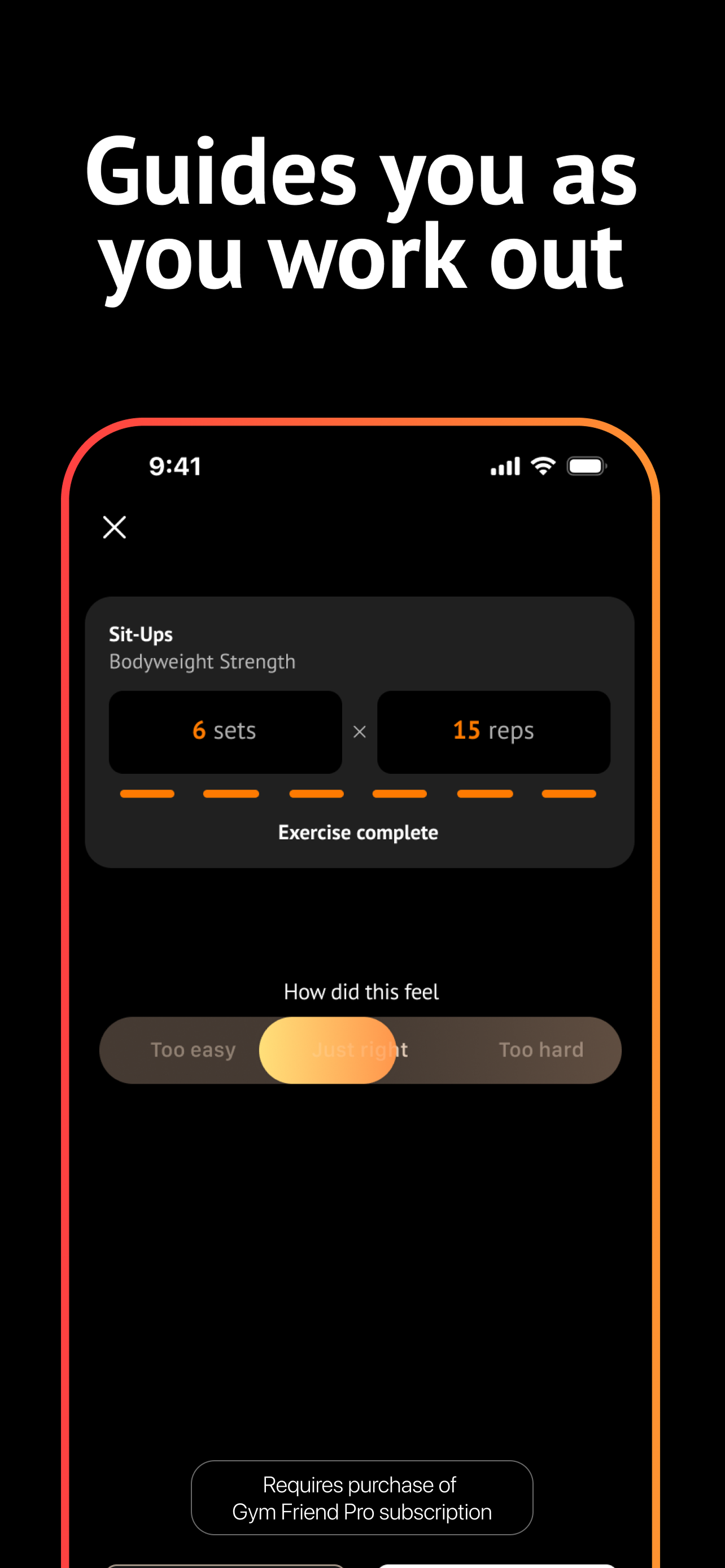
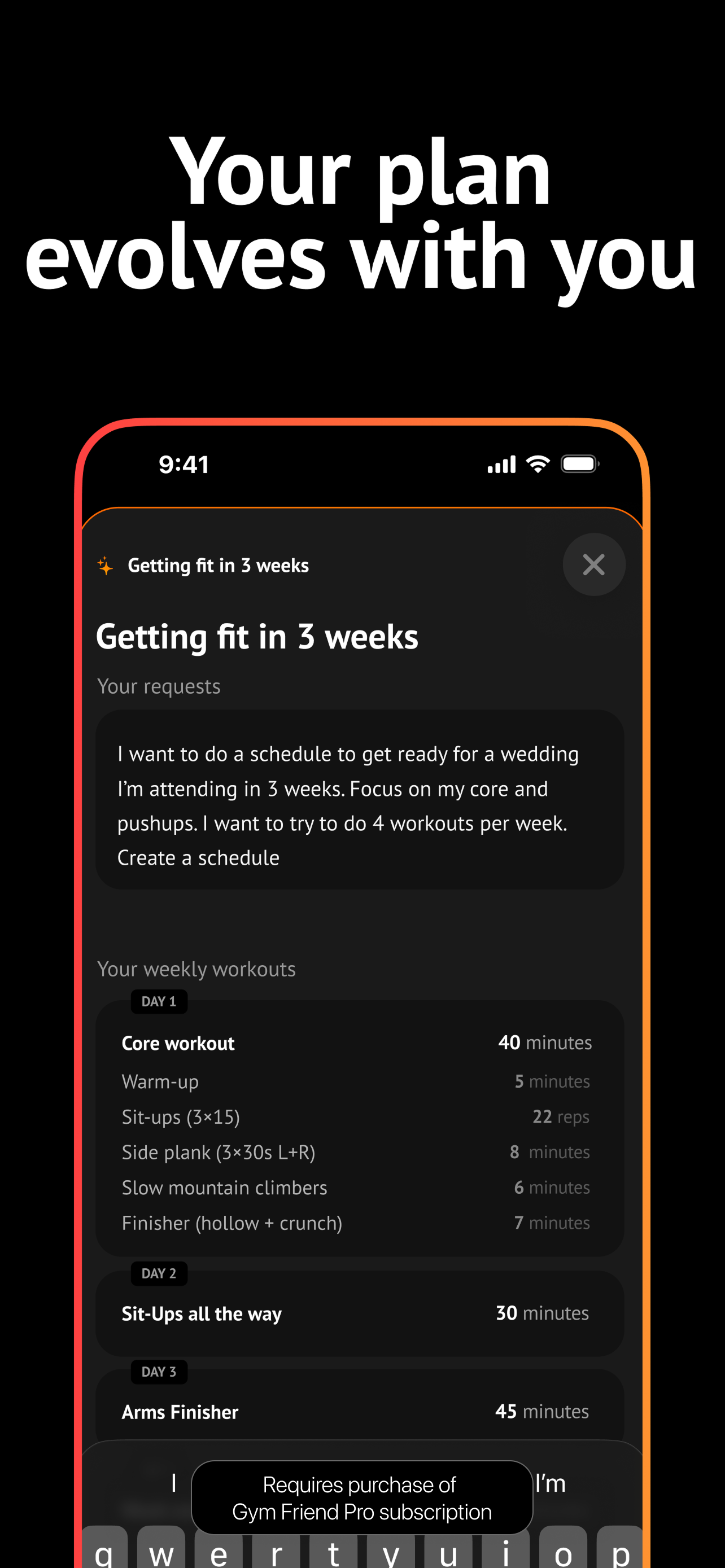
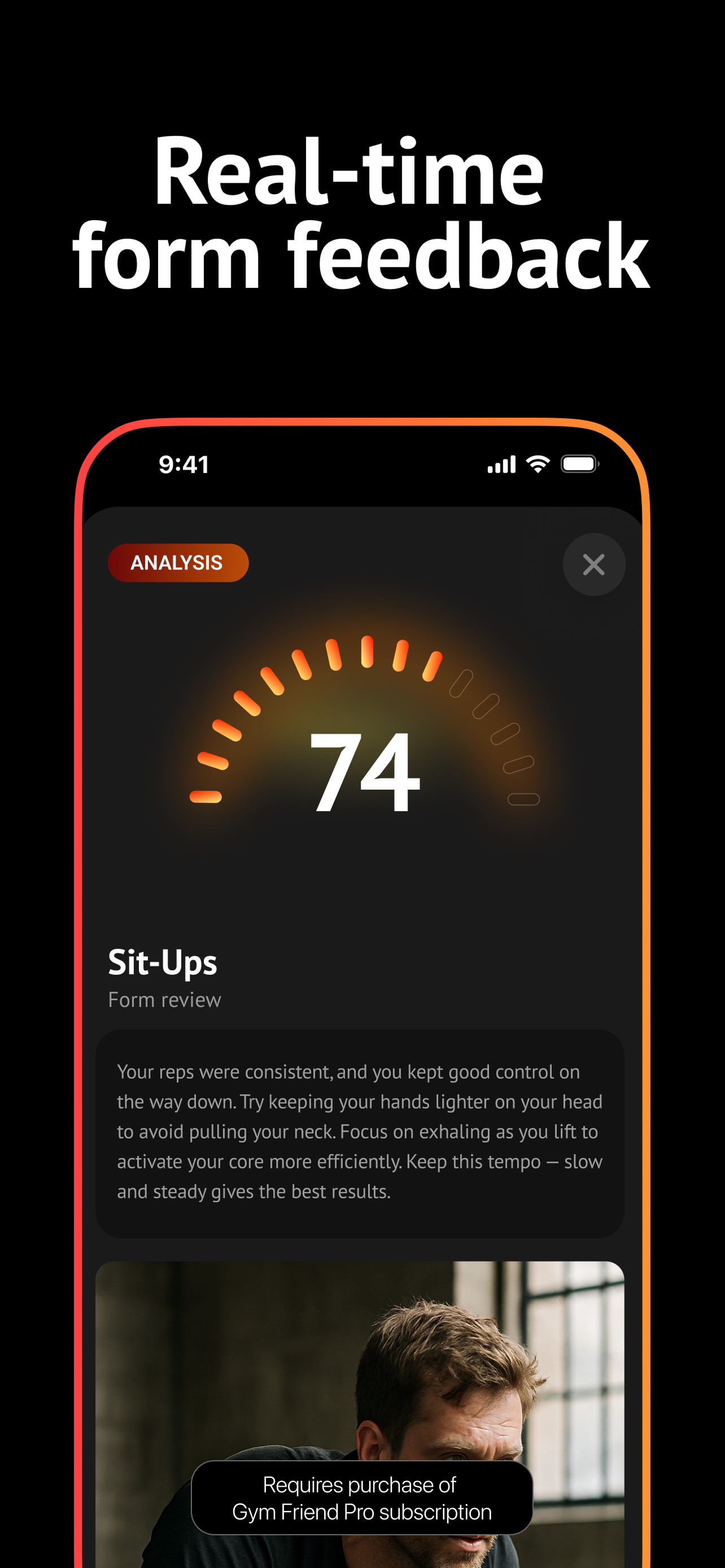
Edit your plan, track progress, and get realtime coaching


Frequently Asked Questions
How long until my posture improves?
Most people notice meaningful improvement within 4-6 weeks of consistent training. Full correction of significant imbalances may take 3-6 months.
Should I wear a posture brace?
Braces can be useful as a temporary reminder, but they don't fix the underlying problem. Muscles that are supported don't strengthen. Use exercises, not braces, as your primary solution.
Why does good posture feel uncomfortable at first?
Your body is adapted to your current (poor) posture. Proper alignment uses muscles that have been underworked and feels unfamiliar. This discomfort decreases as muscles strengthen.
Can posture be fixed at any age?
Yes. While it may take longer with more significant structural changes, meaningful improvement is possible at any age through consistent training.
Do I need to think about my posture all day?
Not once muscles are balanced. The goal is posture that's automatic because the underlying muscles are strong enough to hold proper alignment naturally.