Core Exercises for Men

A strong core isn't about doing endless crunches hoping for a six-pack—it's about building the functional strength that protects your spine, powers your lifts, and yes, eventually reveals those abs when body fat is low enough. This program trains your complete core: front, sides, and back, developing the strength that makes you perform better at everything while building the foundation for visible results.
Core Training for Men
Your core is more than abs. It's the entire muscular cylinder around your midsection—rectus abdominis (the six-pack), obliques (sides), transverse abdominis (deep stabilizer), and erector spinae (lower back). All of these must be strong for complete core function.
The core's primary job is stability, not movement. It braces your spine during squats, deadlifts, and overhead pressing. A weak core is often the limiting factor in how much weight you can handle safely. Building core strength directly improves your other lifts.
Visible abs require two things: developed muscles (training provides this) and low enough body fat (nutrition provides this). You can have a strong core that's invisible under fat, or weak abs that show on a skinny frame. The goal is strong AND visible.
Benefits of Core Training
Bigger Lifts
Core strength is the limiting factor in squats, deadlifts, and pressing. Stronger core = heavier lifts.
Injury Prevention
A strong core protects your lower back during heavy lifting and daily activities.
Better Performance
Athletic power transfers through the core. Stronger core = more power.
Visible Abs
Build the muscle that becomes visible when body fat drops.
Improved Posture
Core strength helps you stand tall and carry yourself with confidence.
Back Health
Core training reduces and prevents lower back pain.
Program Overview
Who it's for: Men looking to build core strength and definition
Don't have all this equipment? GymFriend can build you a custom program using whatever you have available.
Why These Exercises?
Each exercise in this program was selected for a specific reason. Here's why:
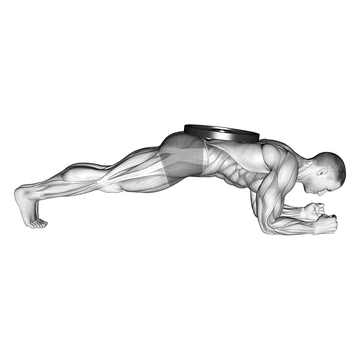
Weighted Front Plank
The foundation of core stability. Teaches bracing under tension.
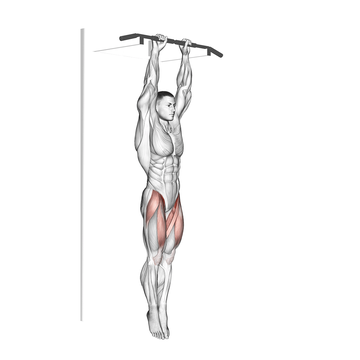
Hanging Straight Leg Raise
Advanced ab work that builds both strength and the lower portion of the rectus abdominis.
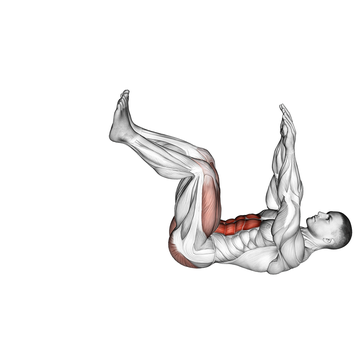
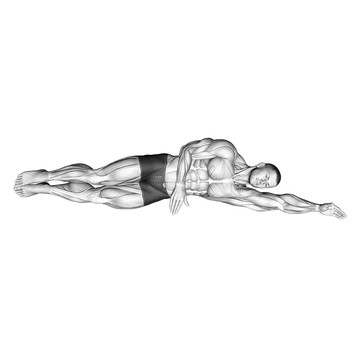
Dead Bug
Trains anti-extension and teaches core stability during limb movement.
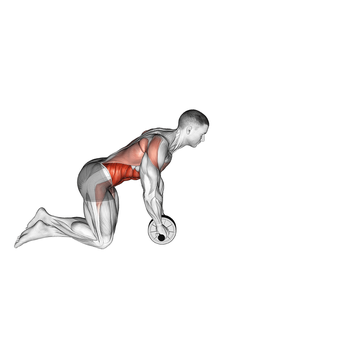
Wheel Rollout
Intense anti-extension training that builds serious core strength.
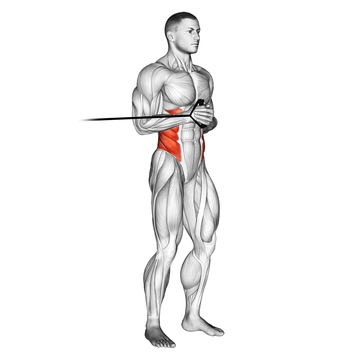
Band Horizontal Pallof Press
Anti-rotation training for functional stability.
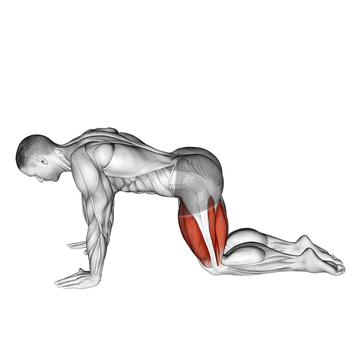
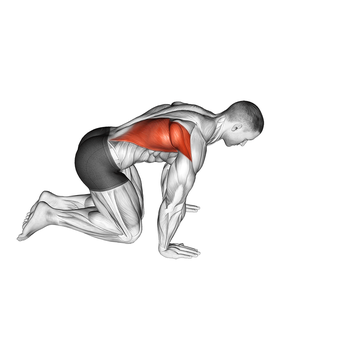
All Fours Squad Stretch
Lower back strengthening to balance the ab work.
The Complete 2-3 days (often added to other workouts) Program
Follow this program consistently for best results. Start with weights that feel manageable and aim to increase gradually each week as you get stronger.
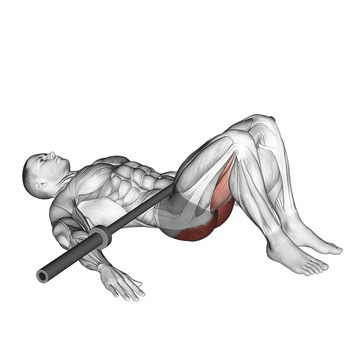
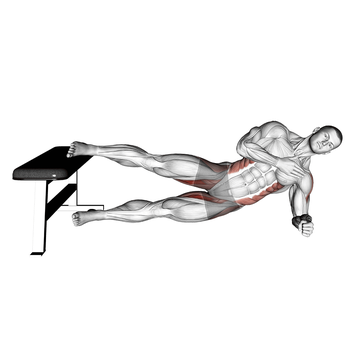
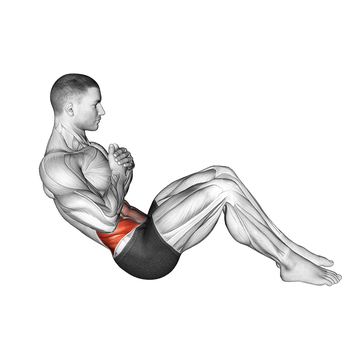
Want this program adjusted for your fitness level, goals, or schedule? GymFriend can create a personalized version just for you.
Maximizing Core Development
- Train core after your main lifts, not before. A fatigued core limits lifting performance.
- Quality beats quantity. Slow, controlled movements create more tension than fast reps.
- Include anti-extension (planks, rollouts) and anti-rotation (Pallof press) exercises.
- Don't neglect your lower back. Back extensions and bird dogs balance ab work.
- For visible abs, combine this training with nutrition that reduces body fat.
- Heavy compound lifts (squats, deadlifts) provide significant core training on their own.
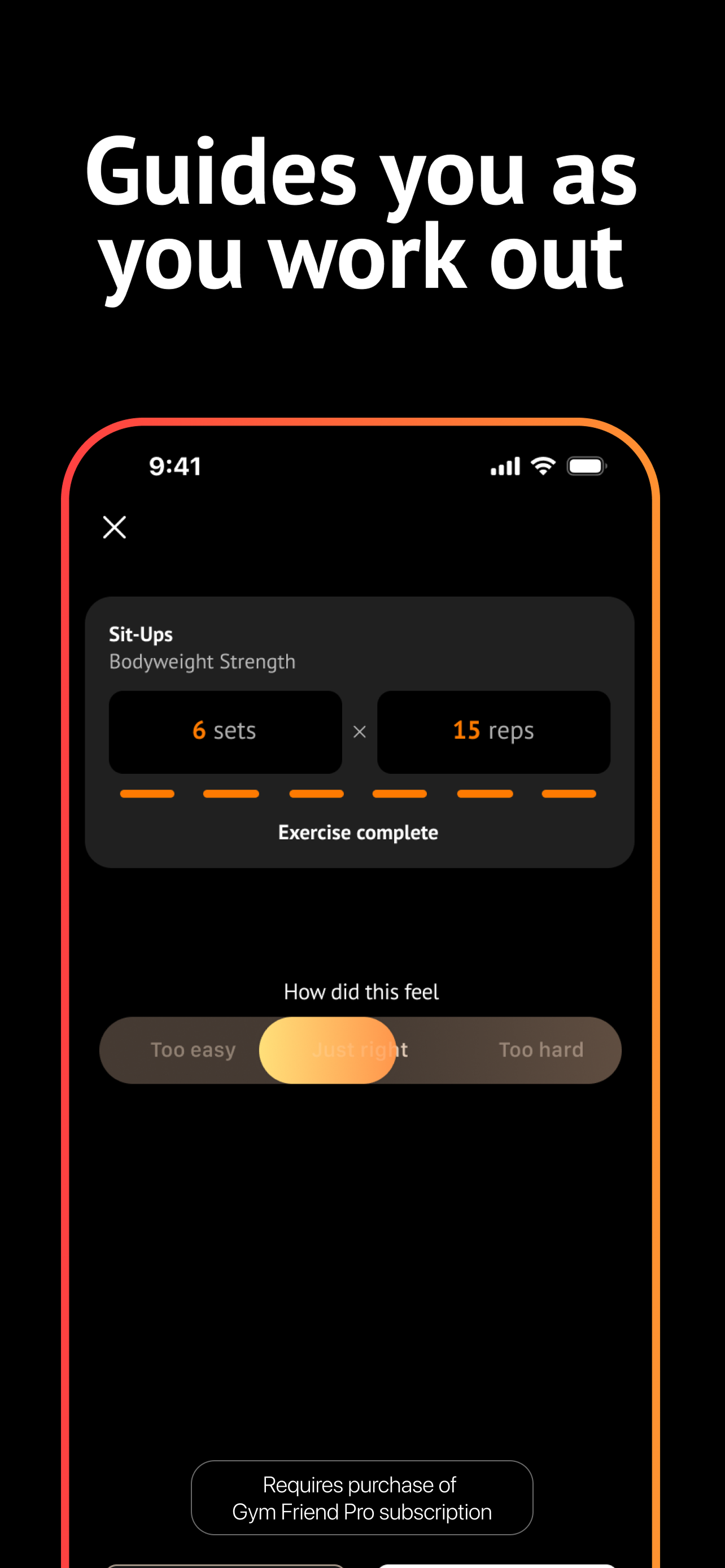
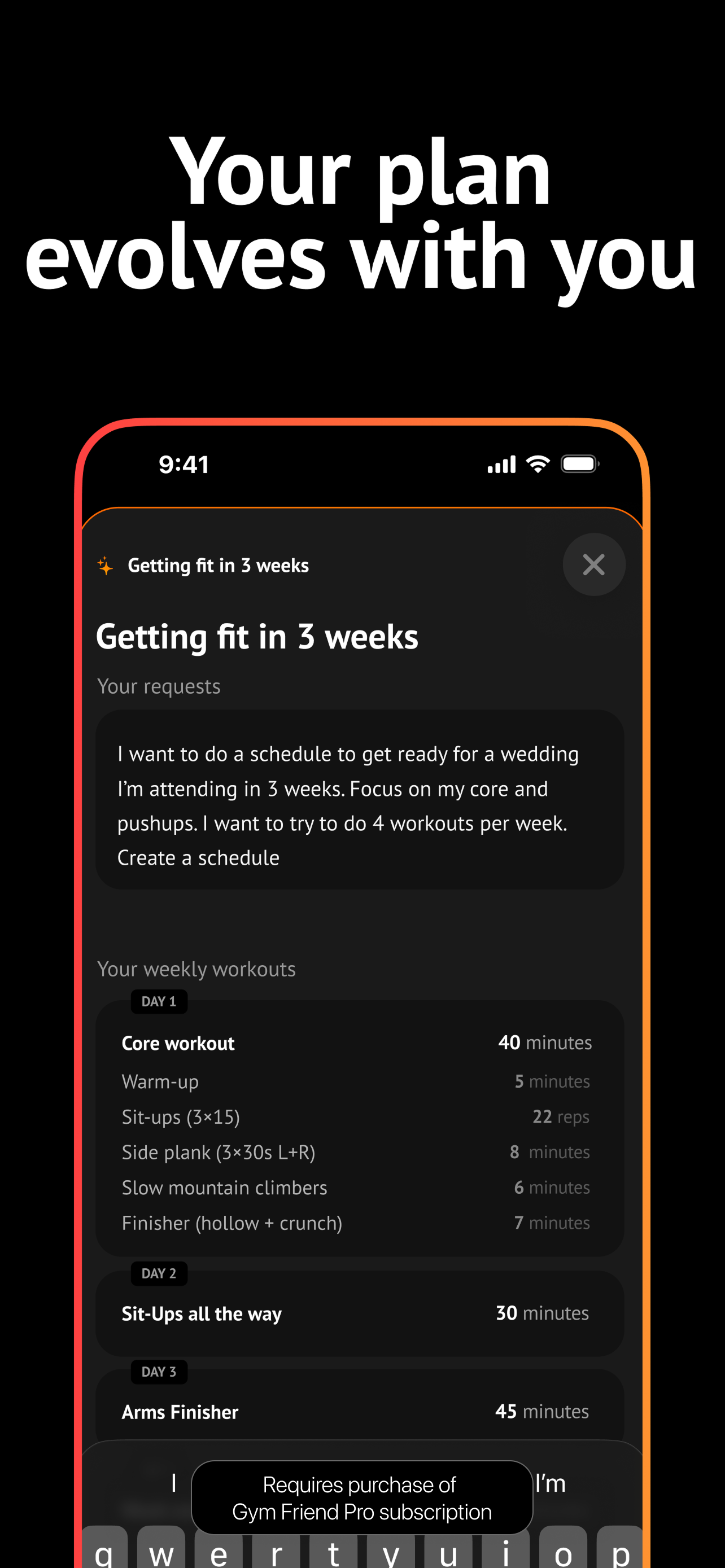
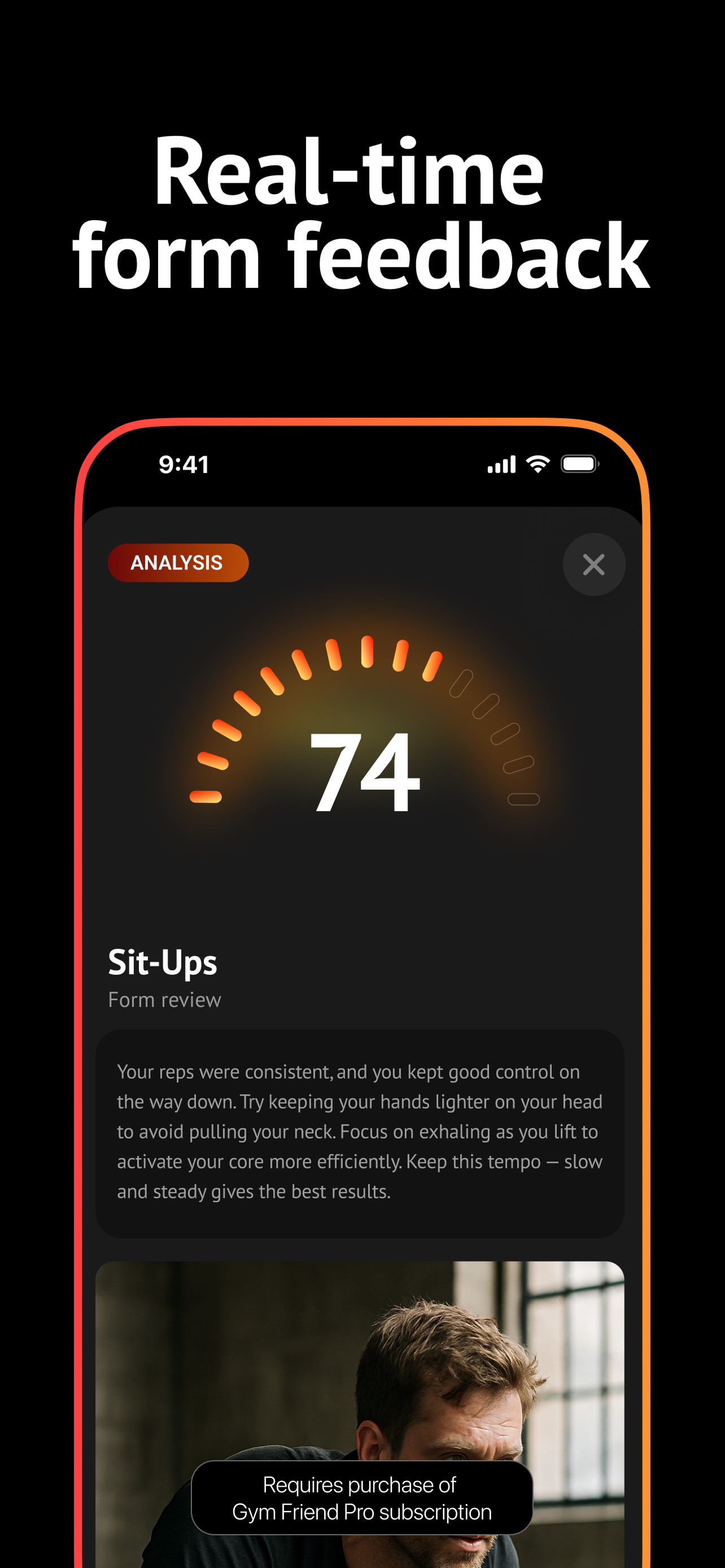
Edit your plan, track progress, and get realtime coaching

Frequently Asked Questions
Should I train core if I squat and deadlift heavy?
Yes. Heavy compounds work your core, but direct training addresses weaknesses and builds beyond what compounds alone provide. Think of it as insurance for your lifts.
How do I get visible abs?
Build the muscle with training (this program), then reduce body fat through nutrition. Most men need 10-14% body fat for visible abs. You can't spot-reduce fat with ab exercises.
Are planks or crunches better?
Both serve different purposes. Planks build stability and endurance; crunches work the rectus abdominis directly. Include both in your training.
How often should I train core?
2-3 direct sessions per week is sufficient when combined with compound lifting. More isn't necessarily better—recovery matters.
When should I add weighted ab exercises?
When bodyweight exercises become easy for 15+ reps with perfect form. Cable crunches, weighted planks, and loaded carries are good progressions.